How to Clean a Burnt Pressure Cooker
Soak the pot in warm soapy water, then lift the stuck food with a wooden or plastic tool instead of metal. A baking soda paste handles light scorch marks, and the sealing ring needs its own wash because it holds burnt smells.
On this page (10 sections)
- Why does food burn in a pressure cooker?
- What should you gather before you start cleaning?
- How do you soak a burnt pressure cooker?
- How do you remove stuck food without scratching the pot?
- How do you treat stubborn scorch marks?
- How do you clean the lid and the sealing ring?
- How do you get the burnt smell out of the cooker?
- How do you prevent burning next time?
- When is a burnt pot beyond saving?
- How to clean a burnt pressure cooker without causing damage
Here's how to clean a burnt pressure cooker: soak the pot in warm soapy water, then loosen the stuck food with a wooden or plastic tool. A baking soda paste lifts light scorch marks, and the sealing ring gets a separate wash because it traps burnt smells.
The earlier you start, the easier the job is. A pot left to soak while still warm releases most of the burnt layer on its own.
Why does food burn in a pressure cooker?
Food burns when there isn't enough liquid at the bottom or the pot is too full. Under pressure the base gets very hot, and any food touching it without liquid to spread the heat will scorch.
Starchy and thick foods are the usual culprits. A dense stew or a sauce with little water can catch at the base before the rest of the pot comes up to pressure.
Thick sauces are the worst offenders because they hold heat in one spot instead of letting it move through the pot. A spoonful of stew that sits flat on the base gets the full heat of the burner or element with no liquid between it and the metal.
Starchy foods add a second problem. Rice, beans, and grains release starch that settles and thickens against the base, so the bottom layer turns into a paste that holds onto the pot even after the rest of the meal is tender.
Knowing how hot does a pressure cooker get explains why the base is the first place to look after a burn. A stainless pot tolerates this heat well, but it still needs a liquid cushion.
Before cooking again, review how to use a pressure cooker for the fill line and liquid amounts. Small changes there prevent most repeat burns.
What should you gather before you start cleaning?
Gather warm water, mild dish soap, a soft sponge, a wooden or plastic scraper, and baking soda. Add white vinegar only if your pot's finish allows it.
Skip steel wool and metal scouring pads. They scratch stainless steel and ruin a nonstick coating in seconds.
Have a towel ready for the pot and a separate bowl for the sealing ring. Keeping the ring apart from the pot stops burnt residue spreading back onto the clean surface.
How do you soak a burnt pressure cooker?
Fill the pot with warm water and a few drops of dish soap, then let it sit for 30 minutes to a few hours. Warm water softens the burnt layer so it lifts without hard scrubbing.
Use enough water to cover the burnt area. For a badly scorched base, add a spoonful of baking soda to the soak for extra lifting power.
Don't fill the pot to the very top if you plan to move it. A half-full pot is easier to carry and less likely to slosh onto the counter.
If the burnt layer has dried hard, a longer soak is better than a shorter soak with more scrubbing. Water does the work that a sponge cannot.
How do you remove stuck food without scratching the pot?
Use a wooden spoon or plastic scraper and push at the edge of the burnt patch, not the middle. The food usually releases in sheets once the soak has done its work.
Work around the base in small sections. If a patch won't move, soak it again rather than forcing the tool.
Keep the tool flat against the base rather than at an angle. A flat edge slides under the food, while a tilted one digs into the surface.
What about the Instant Pot inner pot?
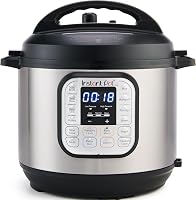
The Instant Pot Duo 6 Qt has a stainless steel (18/8) inner pot with a tri-ply bottom. That base takes heat well but still scorches when a recipe runs dry, so treat it like any stainless pan.
The tri-ply bottom is a layer of metal built into the base to spread heat. That even spread is what makes the pot good for searing and sautéing, and it is also why a dry spot at the center heats up fast.
The 6-quart size is large enough that some cooks pack it too full. Staying under the fill line matters more in a pot this size than in a smaller one.
Its stainless surface can take a nylon brush and a baking soda paste. Avoid abrasive powders that dull the finish, and dry the pot fully before putting it back in the housing.
Wipe the outside of the pot as well as the inside. Residue on the outer base can bake onto the heating element area over time.
How do you treat stubborn scorch marks?
Make a paste from baking soda and a little water, spread it over the scorch, and leave it for 15 to 30 minutes. Then scrub gently with a soft sponge and rinse.
For a really stubborn ring of burnt food, simmer a little water and vinegar in the pot on the stove or sauté setting. Let it cool before scrubbing.
Never scrape at a nonstick coating with anything sharp. If the coating is blistered or peeling, stop cleaning and replace the pot.
A dark stain that stays after scrubbing is usually harmless. Judge the pot by how it feels, not by the color of the metal.
How do you clean the lid and the sealing ring?
Wash the sealing ring by hand in warm soapy water and let it air dry fully. The rubber holds odors, so a burnt smell in the ring can linger long after the pot is clean.
Wipe the lid and its vent with a soft cloth. Don't put the lid or ring in the dishwasher unless your model's instructions allow it.
Lift the ring out of its groove and look at both sides. Burnt residue and grease can sit on the inner edge where the ring presses against the pot rim.
Wipe the vent and the float valve area with a damp cloth, then check that nothing is stuck in the opening. A blocked vent is a safety issue, not just a cleaning one.
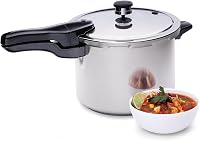
The Presto 09936 pack replaces the sealing ring and overpressure plug on many Presto models, and it fits 4-quart and 6-quart cookers including the 0136304. It forms a pressure-tight seal between the cover and the body.
The pack also replaces Presto parts 09904 and 50295. The included overpressure plug is the small safety part that releases excess pressure, so a worn plug is worth replacing at the same time as the ring.
Work the new ring into the cover in four sections, top, bottom, left and right. Push down on the center of the cover and open and close it a few times so the ring settles.
Do this work-in slowly, a small section at a time, until the ring sits fully in the groove. Rushing it can leave a stretch of ring sitting outside the groove, and the lid will not seal.
How do you get the burnt smell out of the cooker?
Leave the open pot with a spoonful of baking soda inside for a day, then rinse. The baking soda absorbs odors without leaving a scent of its own.
Wash the ring and vent again if the smell returns. Airing everything outdoors on a dry day helps too.
How do you prevent burning next time?
Keep liquid in the pot, stay under the fill line, and stir thick recipes before closing the lid. These three habits prevent most burnt bases.
- Add at least a cup of liquid for most recipes unless the recipe says otherwise.
- Don't pack the pot past its maximum fill line, especially with grains and beans.
- Stir sauces and thick stews so nothing sits directly on the base.
- Release pressure naturally for starchy foods so they don't foam onto the base.
Sautéing before pressure cooking helps too. When you brown food in the open pot first, you can stir and scrape the base as you go, so nothing has a chance to stick before the lid goes on.
If burns keep happening, a cooker with more even heating may suit you better. Our guide to how does a pressure cooker work explains the heat and pressure cycle in plain terms.
If you're shopping for a replacement, compare options in our roundup of the best pressure cookers.
When is a burnt pot beyond saving?
A stainless steel pot almost always recovers after soaking and gentle scrubbing. A nonstick pot with a damaged coating does not, because scrubbing makes the coating worse.
Check the sealing ring, vent, and overpressure plug after a bad burn. Replace anything that looks melted, cracked, or worn before the next run.
Look at the ring for swelling or a stretched shape as well as for smell. A ring that no longer sits flat in the groove will not hold pressure, however clean it is.
How to clean a burnt pressure cooker without causing damage
To clean a burnt pressure cooker, soak first, scrape gently, treat scorch marks with baking soda, and give the sealing ring its own wash. The order matters more than the products you use.
Pick the Instant Pot Duo 6 Qt if you want a stainless inner pot that handles soaking and gentle scrubbing well. Pick the Presto 09936 pack when the sealing ring still smells or looks worn after cleaning.
Avoid the shortcuts that cause damage: no metal scrapers, no harsh abrasives on nonstick, and no dishwasher run for parts that should be hand washed. A little patience at the soaking stage saves the finish.
Frequently asked questions
Can a burnt pressure cooker be saved?
Yes in most cases. A stainless steel pot recovers well after soaking and gentle scrubbing.
A nonstick pot with a damaged coating should be replaced rather than scrubbed further.
Why does my pressure cooker keep burning food?
The usual cause is too little liquid for the amount of food or a pot packed past its fill line. Thick sauces and starchy foods also scorch more easily, so thin them and stir before closing the lid.
Is it safe to use a pressure cooker after a burn?
Check the sealing ring, vent, and overpressure plug for damage or melted spots before the next run. If the burn left a sticky residue on the lid parts, wash them fully and let everything dry.
Replace any part that looks worn.
Should I scrub a burnt pressure cooker with steel wool?
No. Steel wool and metal scouring pads scratch stainless steel and destroy nonstick coatings.
Use a wooden spoon, a plastic scraper, or a nylon brush, and soak first so the food releases on its own.