How Hot Does a Pressure Cooker Get?
A standard pressure cooker reaches about 250°F (121°C) inside once it holds its usual working pressure of around 15 psi. That extra heat is the whole point: it cuts cooking time by up to 70% compared with ordinary pots.
On this page (9 sections)
- How hot does a pressure cooker get at full pressure?
- Why does pressure raise the temperature inside the pot?
- What temperature do electric and stovetop cookers reach?
- How does altitude change the cooking temperature?
- How much faster does 250°F cook food?
- How do the pressure settings and release methods affect temperature?
- Is the steam from a pressure cooker dangerous?
- What does the temperature mean for your own cooking?
- How hot does a pressure cooker get? The short answer to take away
A standard pressure cooker reaches about 250°F (121°C) inside once it holds its usual working pressure of around 15 psi. That extra heat is the whole point: it cuts cooking time by up to 70% compared with ordinary pots.
The exact number depends on the pressure setting and your altitude. Below is what happens at each stage, why the temperature stays so steady, and how to use that number in practice.
How hot does a pressure cooker get at full pressure?
About 250°F is the working temperature of most pressure cookers, and it comes from the pressure, not the burner. When the lid locks and steam can't escape, pressure builds until the regulator or sensor holds it at the set level.
For most models that's 15 psi above normal air pressure.
Raising pressure pushes the boiling point of water upward. At sea level water boils at 212°F, so 15 psi of extra pressure lifts that boiling point to roughly 250°F.
The steam and liquid in the pot sit at that temperature, and the food cooks in it.
This is the same reason the pressure cooker is so fast. Heat moves into food faster when the temperature gap is bigger, so a stew that needs hours on the stove finishes in a fraction of the time.
See how does a pressure cooker work for the full mechanics.
Why does pressure raise the temperature inside the pot?
Pressure squeezes the steam and water molecules together, and that changes the point where water turns to steam. In an open pot, water molecules escape into the air as soon as they have enough energy at 212°F.
In a sealed pot, those molecules are trapped and keep bumping into each other.
The trapped steam exerts its own pressure on the liquid surface. For the water to boil, its vapor pressure has to match both the outside air and the trapped steam above it.
That takes more energy, so the boil happens at a higher temperature.
The result is a steady, repeatable cooking environment. Once the cooker reaches its set pressure, the regulator releases just enough steam to hold it there.
The temperature stops climbing and stays at its working level until you turn off the heat.
What temperature do electric and stovetop cookers reach?
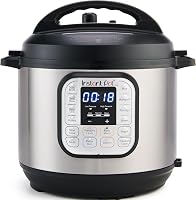
Both types land near the same temperature when set to high pressure. An electric model like the Instant Pot Duo 6 Qt controls pressure with a sensor and holds it close to its set point.
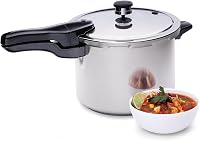
A stovetop model like the Presto 01362 uses a weighted regulator that automatically maintains the proper cooking pressure.
The difference is control, not top temperature. Electric cookers hold pressure more precisely and switch themselves down.
Stovetop cookers rely on you to adjust the burner so the regulator keeps a gentle rocking or hissing rhythm.
Either way, expect around 250°F on the high setting. Low pressure settings sit lower, which suits delicate foods like fish or custards.
Our guide to the best pressure cooker compares electric and stovetop options in more detail.
How does altitude change the cooking temperature?
Higher altitude lowers the pressure and the temperature, so food needs longer. At 5,000 ft the air is thinner, so a cooker builds less pressure above the outside atmosphere.
The same 15 psi gauge reading still gives 250°F, but reaching it takes a bit more time.
Most recipes assume sea level. If you live well above it, add a little time for dense foods like beans and meat.
Some electric models have an altitude adjustment in the settings; stovetop models just need you to watch the regulator and extend cooking.
The USDA notes that pressure cooking is one of the reliable ways to reach safe internal temperatures at high altitude. Their food safety guidance covers why pressure cooking helps when boiling alone struggles.
How much faster does 250°F cook food?
The heat gain shortens cooking time by up to 70%, which is why a pressure cooker earns its counter space. Instant Pot says its cookers finish meals up to 70% faster than slow cooking.
Kuhn Rikon gives the same figure for its stovetop models.
The gain shows up most with tough cuts and dried beans. Meat that needs hours of braising to tenderize gets there in a fraction of that time.
Beans that usually simmer for an hour and a half cook in about half that, with no overnight soak required.
The time saving is a temperature effect. Every extra degree speeds up the chemical reactions that soften meat and break down starches.
A jump of nearly 40°F over boiling does a lot of work in a short window.
How do the pressure settings and release methods affect temperature?
High pressure runs hottest, low pressure runs cooler, and the release method affects timing, not cooking heat. Most cookers offer high and low settings.
High holds near 250°F; low holds a lower temperature for gentler cooking.
Releasing steam is a separate decision. A quick release drops pressure fast and stops cooking almost at once.
A natural release lets the pot cool gradually and keeps the food at temperature longer, which suits stews and tough meat.
The Instant Pot Duo uses an easy-release switch for fast steam release. The Kuhn Rikon lists four separate steam release mechanisms for before, during and after cooking.
Either design just controls how quickly the pot drops back to normal.
Does a pressure cooker stay hot after you turn it off?
Yes, and the heat is carried in the metal, not just the steam. A stovetop cooker like the Presto 01362 has a heavy stainless body and a locking cover that hold warmth after the burner goes off.
That is why natural release works: the food keeps sitting in that heat while pressure falls on its own.
The pot on its base stays warm for a good while even after the pressure is gone. Clear the stovetop and let it cool before you lift it.
That is also when the lid and inner pot are easiest and safest to handle.
Is the steam from a pressure cooker dangerous?
The steam is the hottest thing in your kitchen, and it causes instant burns. At 250°F it carries more heat than steam from an open kettle.
Open the release valve away from your face, hands and arms.
The Presto 01362 has a cover lock indicator that won't let the lid open while pressure remains. The Kuhn Rikon's locking lid works the same way.
Trust those safety features and never force a lid that won't turn.
Let the cooker cool before you touch the body or lift the inner pot. Steam can also spit from the regulator during cooking, so keep the pot away from overhead cabinets.
Our step-by-step guide to how to use a pressure cooker walks through safe release.
How do you handle a pressure cooker safely?
Release steam in short bursts, not one long blast, and keep your hands clear. Let the pressure indicator drop fully before turning the lid.
If the regulator clogs or spits food, turn off the heat and wait for the pressure to fall on its own.
The Instant Pot Duo's easy-release switch makes that short-burst habit simple, and its steam comes out in one controlled spot. With a stovetop model, keep the regulator clear and let it rock rather than blast.
Either way, the goal is the same: bring the pressure down slowly and deliberately before you touch anything.
What does the temperature mean for your own cooking?
Treat 250°F as the standard working heat and use it to adjust times, not to judge when food is done. Follow the recipe's pressure level and time, then check doneness.
The pot runs at the same temperature whether you cook rice or a roast.
Dried beans and tough meat gain the most from the high setting. Delicate vegetables and fish do better at low pressure.
For large batches, choose an 8 quart pressure cooker so you don't fill past the line.
Altitude and pressure setting are the two things that shift the internal temperature. Get those right and the rest is timing.
Use the cooker's safety releases as designed, and the heat stays where you want it.
How hot does a pressure cooker get? The short answer to take away
A pressure cooker gets to about 250°F at its normal high setting, and that number comes from the pressure inside, not from the burner. The extra heat over an open pot's 212°F boil is what shortens cooking time so much.
If you're shopping for one, compare the best pressure cookers by how precisely each holds its pressure. Then follow the recipe's pressure level and time, and let the safety releases do their job.
Frequently asked questions
Is a pressure cooker hotter than a regular pot of boiling water?
Yes. A regular pot tops out near 212°F at sea level, while a pressure cooker at its normal setting runs around 250°F.
The sealed lid traps steam so the pressure rises, and that pressure pushes the boiling point of water upward.
Does a pressure cooker get hot enough to burn food?
The food itself is protected by the liquid in the pot, but the metal and steam are another story. Steam at 250°F causes instant burns, so release pressure away from your face and hands.
The cooker body also stays hot well after the burner is off.
How much hotter is a pressure cooker than an open pot?
At sea level the gap is roughly 38°F between a rolling boil at 212°F and a pressure cooker at 250°F. That sounds small, but it shortens cooking time a lot because heat transfer speeds up with every degree.
Does the temperature inside a pressure cooker depend on the recipe?
No. Once the cooker is up to pressure, the temperature is set by the pressure itself, not by what you're cooking.
A soup and a pot roast cook at the same internal temperature, though the time each needs differs.
Can a pressure cooker get too hot?
Only if the pressure climbs above its rated setting. That's why every cooker has safety releases, and why you should never fill it past the marked line or leave a stovetop model on high heat unattended.