How Long to Cook Chicken in a Pressure Cooker
Cook chicken 8 to 10 minutes total for boneless pieces and 10 to 15 minutes for bone-in pieces at high pressure for parts, and 25 to 30 minutes for a whole bird. Use natural release for 10 minutes, then confirm the thickest piece reads 165°F (74°C) before serving.
On this page (10 sections)
- How long to cook chicken in a pressure cooker by cut
- Why do chicken cuts need different pressure cooking times?
- How do you pressure cook a whole chicken?
- How do you cook chicken breasts without drying them out?
- How long do thighs and wings take?
- Should you use quick release or natural release for chicken?
- How do you know the chicken is safely cooked?
- Which pressure cooker settings and accessories help?
- What changes when the chicken is frozen?
- The bottom line on timing chicken in a pressure cooker
The answer above covers the basics for how long to cook chicken in a pressure cooker. The exact minutes depend on the cut, whether the meat is bone-in or boneless, and whether it went in fresh or frozen.
Get those three facts right and the rest is just watching the clock.
Pressure cooking is fast because steam trapped at high pressure reaches about 250°F (121°C), well above the boiling point of water. Our guide to how a pressure cooker works explains the science in plain terms.
How long to cook chicken in a pressure cooker by cut
Start with 8 to 10 minutes total for boneless pieces and 10 to 15 minutes for bone-in pieces. Round up rather than down, since undercooked chicken is a real risk and slightly longer cooking rarely ruins dark meat.
The table below gives common ranges. Treat them as starting points and confirm doneness with a thermometer every time.
| Cut | Weight or size | High-pressure time | Release |
|---|---|---|---|
| Boneless breasts | 1 to 1.5 lb | 8 to 10 min | Natural 10 min |
| Bone-in breasts | 1 to 2 lb | 10 to 12 min | Natural 10 min |
| Boneless thighs | 1 to 1.5 lb | 8 to 10 min | Natural 10 min |
| Bone-in thighs | 2 to 3 lb | 10 to 15 min | Natural 10 min |
| Wings | 2 lb | 5 to 8 min | Natural 5 min |
| Whole chicken | 4 to 5 lb | 25 to 30 min | Natural 10 to 15 min |
Smaller pieces cook faster, so a pile of chicken tenders needs less time than two thick breasts. Spread pieces in a single layer when you can, or at least keep them from packing tight.
For a whole bird, add roughly 6 minutes per extra pound above 5 lb.
Why do chicken cuts need different pressure cooking times?
Thickness and bone content drive the time more than total weight does. A bone slows heat from reaching the center, and a thick breast takes longer to reach a safe internal temperature than a thin cutlet of the same weight.
Dark meat is more forgiving. Thighs and legs contain more connective tissue, so a few extra minutes tenderizes rather than dries them out.
White breast meat turns stringy faster, so stay near the low end of the range.
Bone-in skin-on pieces also release fat and liquid, which changes how the pot comes up to pressure. That is why recipes for bone-in chicken often add a minute or two even when the weight matches a boneless batch.
How do you pressure cook a whole chicken?
Cook a 4 to 5 pound bird for 25 to 30 minutes at high pressure, then let it rest before carving. A whole chicken is the easiest way to get meat for soup, salads and sandwiches from one cook.
Pat the bird dry and season it inside and out. Add about 1 cup of water or broth to the pot so there is liquid to make steam, then set the chicken on a rack or trivet above the liquid.
The Sugaroom trivet has long silicone handles that make lifting a whole bird out easier.
Close the lid, set the pot to high pressure and start the timer once it reaches pressure. When the time is up, turn off the heat and let the pressure fall on its own for 10 to 15 minutes.
Open the lid away from your face.
Check the thickest part of the thigh, not touching bone, for 165°F (74°C). If it falls short, lock the lid and cook 3 to 5 more minutes.
Let the bird rest 10 minutes before carving so the juices settle.
How do you cook chicken breasts without drying them out?
Use 8 to 10 minutes for boneless breasts and 10 to 12 for bone-in, with a natural release. Breasts have little fat, so the natural release matters as much as the timer.
Season the chicken and lay it in a single layer on the trivet or in the steamer basket. Add 1 cup of broth or water.
Some cooks add a splash of lemon juice or a pat of butter to keep the surface moist.
After the timer ends, wait 10 minutes before releasing any remaining pressure. The meat keeps cooking gently as the pot cools, which evens out the center.
If you plan to shred the chicken for tacos or salad, cook 2 to 3 minutes longer. Shredding hides slight overcooking, while a whole breast served on a plate does not.
How long do thighs and wings take?
Bone-in thighs need 10 to 15 minutes, boneless thighs about 8 to 10, and wings 5 to 8 minutes at high pressure. Dark meat is the most forgiving cut in a pressure cooker, so err on the longer side if you are unsure.
For thighs, add a cup of liquid and stack them no more than two deep. Skin-on pieces release more fat, which you can skim from the broth afterward.
The meat is done when it pulls away from the bone easily and reads 165°F.
Wings cook very fast. Five minutes is enough for small separated wings, while larger whole wings may need 8.
Overcooking makes the skin fall apart, so check early and add time only if needed.
Drumsticks behave like thighs and take roughly the same minutes.
Should you use quick release or natural release for chicken?
Natural release for 10 minutes is the safer default for chicken. Quick release dumps steam fast and can pull moisture out of the meat, leaving it dry and stringy.
Natural release also lets the pot cool gradually, so the center of thick pieces finishes cooking evenly. After 10 minutes the pressure is usually gone or nearly gone, and you can flip the switch to release anything left.
For wings, use a 5-minute natural release as the table shows. For a whole bird or thick breasts, give it the full natural release.
How do you know the chicken is safely cooked?
The thickest part must reach 165°F (74°C) on an instant-read thermometer. Color and juice clarity are not reliable tests, especially for dark meat near the bone.
Check several pieces, not just the top one. Poke the thermometer into the center of a breast and the thickest part of a thigh without touching bone.
Let it settle for a few seconds before reading.
If the chicken falls short, put the lid back on and cook 3 to 5 more minutes at high pressure. Never guess.
Rest the chicken 5 to 10 minutes before cutting so the juices stay in the meat.
Which pressure cooker settings and accessories help?
Use the high-pressure setting and a rack or trivet to keep chicken above the liquid. Most electric models label this "Pressure Cook" or "Manual," while stovetop pots reach high pressure once the weight starts rocking.
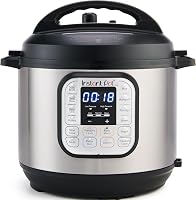
The Instant Pot Duo 6 Qt is a good fit for chicken because its 6-quart pot handles a whole bird up to about 5 pounds and its steam release switch is easy to control. Its stainless steel inner pot also lets you sauté aromatics before you add liquid and lock the lid.
Always add at least 1 cup of liquid, since a pressure cooker needs steam to build pressure. Our step-by-step pressure cooker guide covers the lid, valve and release basics in order.
When should you replace the sealing ring?
A worn sealing ring lets steam escape and slows the time to pressure. Replace it when the ring looks cracked, feels stiff or no longer sits snugly in the lid groove.
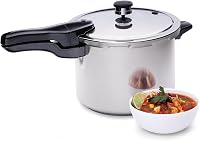
The Presto 09936 pack includes a sealing ring and an overpressure plug for Presto models, so check your pot's model against the fit list. The Instant Pot Duo takes its own brand of ring, so match the part to your cooker.
A slow climb to pressure is often the first sign of a worn ring. Compare current models in our guide to the best pressure cookers if you are shopping for a new pot.
What changes when the chicken is frozen?
Add 5 to 10 minutes to the time for the same cut, and make sure the pieces are separated. A solid block of frozen chicken cooks unevenly, with the outside done before the center thaws.
Use the same liquid amount and the same high-pressure setting. Frozen bone-in pieces need the longer end of the range.
After the natural release, check each piece with a thermometer and cook longer if any part falls short.
For meal prep, cook a batch of chicken at once and refrigerate it within 2 hours. Shredded chicken keeps about 3 to 4 days in a sealed container.
Our guide to how long to cook beans in a pressure cooker gives the times if you want to cook dried beans another day.
The bottom line on timing chicken in a pressure cooker
Use 8 to 10 minutes total for boneless pieces and 10 to 15 minutes for bone-in pieces, and 25 to 30 minutes for a whole bird, always followed by a natural release. Those numbers cover most of what you will cook, and a thermometer settles the rest.
Pick the shorter time for boneless white meat and the longer time for bone-in dark meat. When in doubt, add 2 minutes and check early rather than serving undercooked chicken.
Write down the time that worked for your pot and cut, since pressure cookers vary slightly.
Use a trivet so the chicken sits above the liquid and comes out cleanly. Replace a worn sealing ring before it slows every cook.
Frequently asked questions
How long does a whole chicken take in a pressure cooker?
A 4 to 5 pound whole chicken needs about 25 to 30 minutes at high pressure. Add roughly 6 minutes for each extra pound, let pressure release naturally, and confirm the thigh reads 165°F.
How long do chicken thighs take in a pressure cooker?
Bone-in thighs need 10 to 15 minutes at high pressure, and boneless thighs need about 8 to 10 minutes. Dark meat tolerates a few extra minutes without drying out, so aim for the upper end of the range.
Can you cook frozen chicken in a pressure cooker?
Yes, but add about 5 to 10 minutes to the time for the same cut and make sure it is fully separated. Frozen chicken cooks unevenly in a solid block, so check every piece reaches 165°F.