How to Use a Non-Electric Pressure Cooker
To use a non-electric pressure cooker, load it with food and liquid below the max fill line, lock the lid, and heat it on the stove until the pressure indicator rises. Cook for the time your recipe gives, release the steam fully, and only then open the lid.
On this page (8 sections)
- What do you need to know before the first use?
- How do you load a stovetop pressure cooker safely?
- How do you lock the lid and bring the cooker up to pressure?
- How do you time the cooking and adjust the heat?
- How do you release pressure and open the lid?
- How do you clean and care for a non-electric pressure cooker?
- What mistakes should you avoid with a stovetop cooker?
- Which cooker and supplies should you start with?
To use a non-electric pressure cooker, fill it below the max line, lock the lid, and bring it up to pressure on the stove. Cook for the recipe's time, release all the steam, and open the lid only after the lock drops.
That sequence matters more than the recipe, because stovetop cookers build and hold pressure with heat instead of a plug.
Learning how to use a non electric pressure cooker well starts with the pot in front of you. The sections below walk through each stage, from loading to cleaning, with the checks that keep the process safe.
What do you need to know before the first use?
Read the manual for your model before cooking anything, because fill levels, pressure settings and release methods differ between brands. A 6.3 qt cooker and a 7 L cooker hold different amounts of food, so the same recipe can behave differently in each.
Wash the pot, lid and sealing ring in warm soapy water, then dry them. Fit the sealing ring into the lid groove all the way around, working it in small sections so it sits flat.
Check that the vent, safety valves and handles are clear and tight.
Our guide to how to choose a stovetop pressure cooker covers capacity and base types if you're still picking one. A stainless steel pressure cooker is a common starting point because the body resists rust and cleans up easily.
How do you load a stovetop pressure cooker safely?
Keep the total load under the max fill line, and fill foaming foods no more than halfway. The max line is usually marked inside the pot; the half mark applies to beans, grains and anything that froths as it boils.
Add liquid first. Most recipes call for at least 1 cup, enough to create steam without drying out before the food cooks.
Put larger pieces on the bottom and stack smaller ones above, leaving room for steam to move.
Don't pack the pot tight. Food that presses against the underside of the lid can block the vent.
If you use the steamer basket, keep it clear of the rim so steam can pass around it.
Use a trivet for pot-in-pot recipes and foods that scorch easily. A raised rack keeps food out of the liquid while steam surrounds it.
How do you lock the lid and bring the cooker up to pressure?
Seat the lid, turn it to the locked position, and set the pot over medium-high heat. Listen for the click that some lids make when the lock engages.
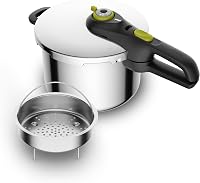
On the T-fal Secure, the rotating open/close mechanism clicks audibly when locked and sealed.
Watch the pressure indicator or weight as the heat rises. It should rise steadily within a few minutes.
Steam will vent from the valve at first, which is normal; once pressure builds, the valve closes and the indicator moves.
Reduce the heat when the cooker reaches pressure. A gentle hiss or slight rocking is enough; a hard rattle or steady venting means the burner is too high.
Turn it down in steps until the cooker settles into a steady rhythm.
Keep the vent clear and stay in the kitchen while the pot is under pressure. Don't leave it running while you're out or asleep.
Which cooker suits a first stovetop setup?
The T-fal Secure 6.3 Qt Stainless Steel fits a family kitchen that wants a mid-size pot for weeknight meals. It's a 6.3-quart stainless steel cooker with a five-point safety system, and the two settings adjust temperature for vegetables and meat.
Its rotating lid clicks when locked and sealed, which gives you a clear cue before pressure starts to build. The body is dishwasher-safe and works on all cooktops, including induction.
T-fal backs it with a limited lifetime warranty.
Choose a larger or smaller size if your recipes run to bulk cooking or single portions. For bigger batches, the Kuhn Rikon below holds more.
Who should choose the Kuhn Rikon Duromatic?
The Kuhn Rikon Duromatic 7 L suits households that cook in larger batches or want Swiss-made stainless steel. It's a 7-liter, 22 cm cooker built from 18/10 stainless steel, with a locking lid and four separate steam release mechanisms.
The Superthermic aluminum base heats evenly on gas, electric, ceramic and induction. Kuhn Rikon says the design cuts cooking time by up to 70% compared with conventional stovetop methods.
A trivet and a Quick Cuisine cookbook come in the box, so you have starter recipes for the first week.
It weighs 7.9 lb and stands 15 in tall with the lid, so measure your storage space and overhead clearance before you commit. Pick the T-fal for a smaller pot, or this one for a larger, premium build.
How do you time the cooking and adjust the heat?
Start the timer when the cooker reaches full pressure, not when you turn on the burner. The come-up time varies with the burner, the load and the starting temperature of the food, so timing from the heat-on moment can overcook a dish.
Keep the heat low enough to hold pressure without venting hard. If steam keeps escaping, nudge the burner down; if the indicator falls, raise it slightly.
Recipes for stovetop cookers usually give a pressure level, such as low or high, so match it when your cooker has a selector.
Use the recipe time as a guide for the first batch. Noodles, vegetables and thin cuts finish quickly, while dried beans and tough braises need longer.
Write down what worked so the next batch is easier.
Don't lift the lid or move the weight mid-cook. Let the pot finish its timed run before you start the release.
How do you release pressure and open the lid?
Release all the steam first, then wait for the lock to drop before turning the lid. There are two main methods: quick release and natural release.
For a quick release, move the pot off the heat and open the valve as the manual directs. Steam will rush out; keep your face and hands clear and stand back.
For a natural release, turn off the heat and let the pot sit until the pressure falls on its own. Natural release suits beans, grains and braises that benefit from resting.
Never force the lid. If it won't turn, pressure is still inside.
Wait longer, or run cool water over the lid only when your manual allows it.
Once the lock drops, open the lid away from you so leftover steam escapes. Check that the vent and valves are clear before the next use.
How do you clean and care for a non-electric pressure cooker?
Wash the pot and lid after each use and dry the sealing ring thoroughly. Food residue on the ring or in the vent groove can cause leaks or a poor seal next time.
Let the pot cool before washing it. Sudden cold water on a hot cooker can warp the base.
Most stainless steel bodies are dishwasher-safe, though hand washing the lid and ring keeps them in better condition.
Inspect the sealing ring and overpressure plug regularly. The Presto 09936 pack is a replacement sealing ring with an overpressure plug that forms a pressure-tight seal between the cover and body.
It replaces Presto parts 09904 and 50295 and fits a long list of Presto models.
Check your cooker's model number against the fit list before ordering, since the ring is made for Presto cookers rather than every brand. Store the lid off the pot or loosely in place so the ring isn't compressed between uses.
What mistakes should you avoid with a stovetop cooker?
Overfilling, skipping the vent check and opening early are the three mistakes that cause most problems. Each one defeats a safety feature the cooker relies on.
- Filling past the max line leaves no room for steam and can block the vent.
- Cooking foaming foods above the half mark pushes starch into the valve.
- Forcing the lid before pressure drops risks a burst of steam and hot food.
- Leaving the pot unattended removes the person who would notice a blocked vent.
- Using high heat for the whole cook wastes energy and dries out the base.
Small habits prevent most of these. Measure the load, clear the vent, stay nearby and follow the release steps.
If you want to compare electric models next, our guide to how to use a Bella electric pressure cooker shows how the button-based flow differs. An electric cooker handles the pressure and timing for you, while a stovetop cooker leaves both to the cook.
Which cooker and supplies should you start with?
For most people learning how to use a non electric pressure cooker, start with a mid-size stainless steel pot and a spare sealing ring. The T-fal Secure 6.3 Qt covers family meals and has a clear lid lock, so you can hear when it's sealed.
Pick the Kuhn Rikon Duromatic 7 L if you cook larger batches and want a Swiss-made pot with a locking lid and four steam releases. Add the Presto 09936 ring only if you own a compatible Presto cooker.
Compare the full field in our best stovetop pressure cookers guide before you buy.
Then practice with a simple recipe, like a batch of soup or steamed vegetables, before you try beans or a braise. The first few cooks teach you how your burner and pot behave together.
Frequently asked questions
How long does a stovetop pressure cooker take to come up to pressure?
Plan on several minutes over medium-high heat before the pressure indicator rises, depending on burner size, the amount of food and liquid, and the cooker's base. Start timing only when the cooker reaches pressure.
Reduce the heat then so the cooker holds pressure without rattling or venting hard.
How much liquid goes into a non-electric pressure cooker?
Use enough liquid to build steam, usually at least 1 cup in most recipes, and stay below the cooker's max fill line. Fill beans, grains and foods that foam no more than halfway.
Follow the manual's fill levels for your model, since oversized loads can block the vent.
Can you open a stovetop pressure cooker early?
No. Wait until the pressure is fully released and the lid lock has dropped before opening.
If the lid won't turn, the cooker is still under pressure.
Move it off the heat, wait longer, or run cool water over the lid only when the manual allows it.
How often should you replace a pressure cooker sealing ring?
Replace the sealing ring when it turns hard, cracked, stretched or discolored, or when the cooker starts leaking steam from under the lid. Many makers suggest checking it once a year.
Follow the manual for your model and keep a spare ring on hand so cooking isn't interrupted.
Can you use a stovetop pressure cooker on an induction hob?
Only if the cooker has a magnetic base. Many stainless steel stovetop cookers, including the T-fal Secure and the Kuhn Rikon Duromatic, work on induction as well as gas, electric and ceramic.
Check your hob's guide and the cooker's base before using high heat.
Is a stovetop pressure cooker safe to leave while cooking?
Stay home and nearby while the cooker is on the stove. Check the pressure level now and then, keep the vent clear, and never leave children alone in the kitchen.
Move the cooker off the heat when the timed cooking is finished and follow the release steps before opening.