How to Choose a Stovetop Pressure Cooker
Choose a stovetop pressure cooker by matching its capacity to your meals, confirming it fits your cooktop, and checking its lid lock, pressure controls and cleanup needs. Then compare materials and included accessories.
On this page (7 sections)
- What size stovetop pressure cooker should you choose?
- Will the cooker work on your stovetop?
- Which pressure controls and safety features matter?
- Is stainless steel the right material?
- What should you check before buying a model?
- How do you compare cookers without overbuying?
- How do you choose the right stovetop pressure cooker?
Choose a stovetop pressure cooker by matching its capacity to your meals, confirming it fits your cooktop, and checking the lid lock, pressure controls and cleanup needs. Then compare material and included accessories.
A stovetop model heats on a burner, so you control the heat as pressure builds and cooking continues. If you are still deciding between cooker types, start with pressure cookers explained.
What size stovetop pressure cooker should you choose?
Choose a capacity that fits your usual meal and batch size, while leaving room to follow the cooker’s fill limits. The pot’s stated capacity is not the same as the amount you can fill for pressure cooking.
A 6-quart cooker is a useful reference point for everyday cooking. For a closer look at the trade-offs between sizes, see our pressure cooker size guide.
Think about the largest meal you make regularly, not just the number of people at the table. Soup, beans and other foods that expand or foam may need extra headroom, so check the manual’s instructions for each food.
Also consider storage and handling. A larger cooker can be harder to lift, store and wash, especially when it is full.
Will the cooker work on your stovetop?
Confirm that the exact cooker model supports your cooktop before you buy it. Compatibility can vary, especially for induction, so check the maker’s guidance for your specific model.
Gas, electric and smooth-top ranges each bring different contact and heat patterns. Induction requires a compatible base, and the cooker should sit steadily on the cooking zone you plan to use.
The four models below offer different capacities and features. Presto, T-fal, Kuhn Rikon and Fissler describe these models as compatible with induction; each also works with other cooktop types.
If induction is your main concern, compare base and cooktop details in our induction pressure cooker guide. Match the model name carefully, since a brand’s other cooker may have different compatibility.
Which pressure controls and safety features matter?
Choose controls you can understand and safety features you can verify in the manual. Look for a secure lid lock, a way to tell when pressure remains and clear instructions for reducing pressure before opening.
Some cookers regulate pressure with a weighted regulator or pressure indicator, while others provide cooking settings. T-fal’s Secure has two cooking settings and a 5-point safety system; Fissler’s Vitaquick has two cooking levels and a red-to-green lock indicator.
Presto’s 01362 has a pressure regulator and a cover lock indicator.
Kuhn Rikon describes its Duromatic as having a lid lock and 4 steam-release mechanisms. Follow the cooker’s instructions for monitoring and releasing pressure.
A locked lid should not be forced open. Wait until pressure has fallen according to the manual, and use the cooker’s specified release method.
Is stainless steel the right material?
Stainless steel can be a practical choice if you want a metal pot and the model’s base matches your stove. Compare the construction and care instructions because material alone does not tell you how the cooker handles or cleans.
All 4 examples here are stainless steel. The Kuhn Rikon has an aluminum sandwich base, while the Presto’s body can go in a dishwasher after you remove the sealing ring and overpressure plug, which need hand washing.
T-fal describes the body as dishwasher safe. Check the manual for lid and seal care before placing any parts in a dishwasher.
The cooker’s weight, handles and lid design can matter as much as its finish. If you prefer a closer material comparison, read our stainless steel pressure cooker guide.
What should you check before buying a model?
Compare capacity, cooktop fit, pressure controls, safety details and care instructions side by side. The best fit is the one that meets your cooking needs without adding features you will not use.
| Model | Capacity | Cooktop fit | Useful details |
|---|---|---|---|
| Kuhn Rikon Duromatic | 7 L | Induction, gas, ceramic and electric | Lid lock, 4 steam-release mechanisms, trivet |
| Presto 01362 | 6 qt | Regular, smooth-top and induction ranges | Pressure regulator, cover lock indicator, helper handle |
| Fissler Vitaquick | 6 L | All heat sources | 2 cooking levels, lock indicator, perforated insert |
| T-fal Secure | 6.3 qt | All cooktops, including induction | 2 cooking settings, 5-point safety system, steam basket |
Descriptions of capacity and compatibility are model specific. Read the instruction manual for fill limits, pressure settings and safe release steps.
When does the Presto 01362 make sense?
The Presto 01362 suits someone who wants a 6-quart stainless steel cooker with a pressure regulator and a cover lock indicator. It works on regular, smooth-top and induction ranges.
The cooker includes a helper handle and a 64-page instruction and recipe book. Its body can go in a dishwasher after you remove the sealing ring and overpressure plug for hand washing.
Choose it if you want straightforward pressure regulation and a 6-quart size. Check the manual for the cooking and cleaning steps you expect to use.
When is the T-fal Secure a good fit?
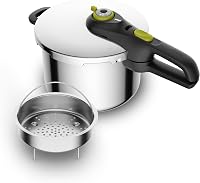
The T-fal Secure suits someone who wants a 6.3-quart capacity and 2 pressure cooking settings. It is compatible with all cooktops, including induction.
Its steam basket adds an option for cooking food above the liquid. The rotating open and close mechanism clicks when the cooker is locked.
Choose it if the basket and 2 settings match the way you cook. Check the manual to see how the pressure settings and lid mechanism work before your first use.
Who may prefer the Kuhn Rikon Duromatic?
The Kuhn Rikon Duromatic suits someone looking for a 7-liter stainless steel cooker with a locking lid and multiple steam-release mechanisms. Its aluminum sandwich base works on induction, gas, ceramic and electric stovetops.
The included trivet can raise food above the cooking liquid, while the Quick Cuisine cookbook gives you recipes to start with. Confirm that the capacity fits your recipes, burner and storage space.
Choose it if you want the 7-liter size and included accessories. Compare its dimensions with your cabinet and cooking area before deciding.
What stands out about the Fissler Vitaquick?
The Fissler Vitaquick suits someone who wants a 6-liter stainless steel cooker with 2 cooking levels and a lock indicator. Its base is suitable for all heat sources.
The red-to-green indicator and audible click show when the cooker is securely closed. The included perforated insert can help when you want to steam food.
Choose it if the 2 cooking levels and insert fit your plans. Check the manual’s instructions for setting and releasing pressure.
How do you compare cookers without overbuying?
Start with the capacity and cooktop you need, then compare safety controls and care. A cooker that works with your stove and fits your regular meals is more useful than one chosen for a single extra feature.
Use this short checklist:
- Confirm cooktop compatibility for the exact model.
- Choose a capacity that fits your normal meals and batches.
- Check how the lid locks and how you can tell pressure remains.
- Read the manual’s instructions for pressure release and cleaning.
- Check what accessories are included and whether they fit your recipes.
- Consider the cooker’s size and weight.
If you are weighing stovetop against electric options, our pressure cooker comparison guide can help you make that broader choice. For stovetop-specific alternatives, see the best stovetop pressure cookers.
How do you choose the right stovetop pressure cooker?
Choose a stovetop pressure cooker with enough capacity for your usual meals, a base that matches your cooktop and controls you can follow with confidence. Pick Kuhn Rikon for its 7-liter pot and trivet, Presto for its 6-quart size and regulator, Fissler for 2 cooking levels and an insert, or T-fal for 2 settings and a steam basket.
Before buying, verify the exact model’s compatibility and read its instructions for filling, releasing pressure and cleaning. Those checks help you choose a cooker that fits your kitchen and routine.
Frequently asked questions
What size stovetop pressure cooker should I buy?
Choose a capacity that suits your usual meals and the amount you cook at once. A 6-quart cooker can be a practical starting point for everyday family meals, while a larger capacity may suit batch cooking.
Check the maker’s fill limits for pressure cooking, since usable capacity is less than the pot’s full volume.
Can I use a stovetop pressure cooker on induction?
Only use a stovetop pressure cooker on induction if its maker says it is induction compatible. Check the exact model because cooktop compatibility can vary.
Also consider the cooker’s base size and whether it sits securely on your induction cooking zone.
What safety features should a stovetop pressure cooker have?
Look for a lid that locks during cooking, a clear way to tell when pressure remains, and a controlled method for releasing steam. Follow the model’s manual for filling, operation and opening.
Never try to force the lid open while pressure remains in the cooker.
Is stainless steel a good material for a pressure cooker?
Stainless steel is a common choice if you want a metal cooker that works on several types of stovetops, depending on its base. Compare the full construction, cooktop compatibility, handles, weight and cleaning instructions.
Stainless steel alone does not tell you how quickly a cooker heats.
How do I know which pressure cooker parts need replacing?
Check the manual for inspection and replacement guidance for the sealing ring, valves and other parts. A cooker that leaks steam around the lid or does not build pressure may need cleaning or a replacement part, but follow the maker’s troubleshooting steps before using it again.