How Much Water to Add to Pressure Cooker
For most 6-quart pressure cookers, start with 1 cup (8 oz) of water and never go below that. Thin foods and quick steam recipes need just the minimum; soups, grains and anything that cooks for 20 minutes or more need 2 to 3 cups or more, always staying under the maximum fill line.
On this page (11 sections)
- Why does a pressure cooker need water at all?
- How much water should you add to a 6-quart pressure cooker?
- What is the minimum water level in a pressure cooker?
- How much water should you use when steaming?
- How much water do you need for rice and grains?
- How do you know you've added too much water?
- How does water amount change between electric and stovetop models?
- How do you adjust the water for time and altitude?
- What else affects how the water behaves?
- Which cooker makes water amounts easy to judge?
- How much water should you add to a pressure cooker?
The short answer: 1 cup of water is the floor for a 6-quart pressure cooker, and most everyday recipes need 2 to 3 cups. Add liquid until it covers the base of the pot but stays under the maximum fill line marked inside the inner pot.
That single number matters more than almost any other setting. Water is what turns into steam, and steam is what creates the pressure that does the cooking.
Get the amount roughly right and the pot reaches pressure, cooks evenly and releases cleanly.
Why does a pressure cooker need water at all?
A pressure cooker cooks with steam, not direct heat, so water is the fuel. The sealed lid traps the steam rising off the liquid, and that trapped steam raises the internal temperature above normal boiling.
With no liquid there's no steam, and with no steam there's no pressure. That's why a dry pot won't cook food properly and why some models will shut off or scorch instead.
If you want the full picture of what happens inside the sealed pot, our explainer on how a pressure cooker works walks through the valve, the gasket and the pressure build step by step.
The water also does practical jobs. It stops food sticking to the bottom during the heat-up phase, and it keeps the base from overheating once the burner or element is on.
A shallow pool at the bottom is doing more work than most people realize.
How much water should you add to a 6-quart pressure cooker?
Start with 1 cup for short cooks and 2 cups for anything longer than 15 minutes. Three cups covers soups, dried beans and large cuts of meat.
Stay well below the maximum line.
The table below is a practical starting point for a standard 6-quart pot. Treat these as baselines and adjust for your recipe, since a very liquid soup needs more water than a dry rice dish.
| What you're cooking | Starting water | Notes |
|---|---|---|
| Steaming vegetables or eggs | 1 cup | Sits under the rack, food stays dry |
| Rice or grains | 2 cups | Plus the water the grain itself absorbs |
| Soups and stews | 3 cups or more | Count the liquid in the recipe as part of this |
| Dried beans | 3 to 4 cups | Beans absorb a lot, so keep extra on hand |
| Large meat cuts | 1 to 2 cups | The meat releases its own liquid as it cooks |
The single most useful habit is to read the fill marks on the inside of the inner pot. Those lines show the safe range, and they matter more than any chart.
What is the minimum water level in a pressure cooker?
1 cup is the practical minimum for most 6-quart electric models, and it's also the amount most makers quote in their instructions. Going below that risks the pot not sealing or not building full pressure.
Some 3-quart models accept as little as half a cup, while 8-quart cookers do better with 1 to 1.5 cups because there's more empty space to fill with steam. Scale the minimum to the pot rather than using one number for every size.
Why does the floor exist? A pressure cooker needs a steady supply of steam for the whole cook, not just at the start.
As the pot heats and vents a little steam during the come-up phase, some liquid leaves. If you started with too little, the base can run dry before the timer ends.
How do you check the water level without opening the pot?
You can't open a pressurized cooker, so judge the level before you lock the lid. Pour your water in first, look at where it sits against the fill marks, then add the food.
A quick tilt of the inner pot shows whether there's enough liquid to cover the bottom in a shallow film.
How much water should you use when steaming?
Use 1 to 2 cups for steaming, enough to sit below the steamer rack without touching the food. The water never needs to cover what you're cooking, because the steam rises around it and does the work.
The rack is what keeps food raised. A trivet with legs does that job well, and the Sugaroom rack has 1-inch legs that hold food above the water line.
Its long handles let you lift a whole chicken or a springform pan out without reaching into the hot pot.
Use less water for quick vegetables and eggs and a bit more for a large roast that steams for 40 minutes or longer. The legs are what matter here, since a rack that sinks into the water defeats the point.
How much water do you need for rice and grains?
Rice needs the water in the recipe plus the base amount the cooker requires, so a 6-quart pot starting with 2 cups is typical. Grains absorb liquid as they cook, so cutting corners here leads to dry or crunchy results.
Follow the ratio on the rice package for the variety you're cooking, then check that the total volume clears the minimum mark. Long-grain rice, brown rice and quinoa all take different amounts.
When in doubt, add a splash more water rather than less.
Porridge and oatmeal are thirstier still. They also foam, so keep the total below the maximum line to leave room for the bubbles.
How do you know you've added too much water?
If the liquid sits above the maximum fill line before cooking, you've added too much. That line exists to stop liquid from spitting up through the steam valve.
Overfilling shows up in three ways: liquid bubbling out of the vent during the cook, a watery final dish, and a longer come-up time because there's more liquid to heat. Soups are the usual culprit, since the solid ingredients are already wet.
The fix is simple. Reduce the water or remove some before locking the lid.
If a soup recipe calls for a lot of broth, cook it with less and stir in the rest after the pressure has fully released.
How does water amount change between electric and stovetop models?
Electric cookers have a built-in minimum you should meet; stovetop models need more water because the burner stays on. An electric pot heats from a controlled element and then holds pressure, so 1 cup often lasts the whole cook.
A stovetop cooker keeps generating steam to maintain pressure while the burner runs. That means it loses more liquid along the way, and its manual usually states a higher minimum.
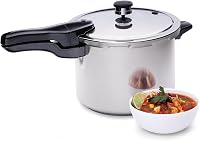
The Presto 01362 is a stovetop model with a pressure regulator that holds the cooking pressure automatically and a cover lock indicator that shows when pressure is still inside.
Never let a stovetop cooker boil dry, since there's no element to shut itself off. Check the manual's stated minimum and add a little extra for long cooks on high heat.
How do you adjust the water for time and altitude?
Add water as the cook time grows, and add more when you cook at high altitude. A 5-minute steam job and a 45-minute bean cook don't need the same amount of liquid, even in the same pot.
Long cooks lose more to steam over time. If a recipe runs past 25 minutes, add about a cup above your starting amount.
For beans and large roasts, the extra liquid also helps prevent scorching at the base.
At higher elevations water boils at a lower temperature, so more of it turns to steam during the cook. Add roughly a cup extra, and follow any altitude guidance in your recipe or manual.
What else affects how the water behaves?
The seal and the valve control how much water escapes, so a clean, well-seated gasket keeps more liquid in the pot. A worn or dirty gasket lets steam leak, which dries the pot faster and can stop it building pressure.
Wipe the gasket and the rim after every cook. If steam keeps escaping or the lid feels loose, a new gasket is the usual fix, and our guide to pressure cooker gaskets covers when to replace yours.
A clean steam valve matters too, since a stuck valve can vent more than it should.
If you're still learning the controls on a new pot, our walkthrough on how to use a pressure cooker takes you through each stage, from loading to release. Getting the water right is easier once the rest of the routine is familiar.
Which cooker makes water amounts easy to judge?
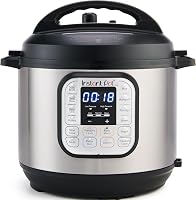
A cooker with clear fill marks and a wide inner pot is the easiest to measure into. The Instant Pot Duo 6 Qt is a strong all-rounder for this, with an 18/8 stainless steel inner pot and a tri-ply base that spreads heat evenly.
It has seven cooking functions, including steam, slow cook and sauté, and an easy-release steam switch so you can vent the pot safely when the cook ends. Instant Pot says it cooks up to 70% faster than slow cooking.
Its 5.68-liter capacity sits in the same range as most 6-quart recipes.
For comparison shopping across brands and sizes, our roundup of the best pressure cookers weighs the options side by side. A bigger pot needs a little more water; a smaller one needs less.
How much water should you add to a pressure cooker?
Use 1 cup as your minimum in a 6-quart pot and 2 to 3 cups for most real recipes, then let the fill marks keep you safe. For steaming, 1 to 2 cups under a raised rack is plenty.
The rules to remember: never go below the minimum, never cross the maximum line, and add extra for long cooks and high altitude. Measure the water before the food goes in, lock the lid and let the steam do the rest.
If the amount in a recipe feels uncertain, round up slightly rather than down. A little extra water is almost always safer than too little.
Frequently asked questions
Can I use too little water in a pressure cooker?
Yes. Too little liquid means the pot can't build and hold steam, and on some stovetop models it can overheat and scorch.
Keep at least 1 cup in a 6-quart cooker and add a little more when the recipe cooks longer than 15 minutes.
Does the amount of water change cooking time?
More water takes longer to heat and come to pressure, so it adds a few minutes to the front of the cook. The pressurized cooking time itself stays about the same once the pot reaches full pressure.
Why does my pressure cooker run dry?
A pot that runs dry usually lost more liquid to steam than the recipe expected, often from a long cook time or a vent that never sealed properly. Add more water next time and check that the valve and gasket are clean.
Is the water amount different for a stovetop pressure cooker?
Yes. A stovetop cooker needs enough water to build pressure safely and keep generating steam while the burner is on.
Check the manual for its stated minimum, and never let a stovetop model boil dry.
Can I add water halfway through a pressure cook?
No. Releasing the lid while the pot is pressurized is unsafe.
If a recipe needs liquid added partway, either use a quick-release, add the water, and bring it back to pressure, or build the extra liquid into the pot from the start.